Bring Back Game Manuals
I've found joy in retro gaming these last couple weeks, playing a lot of Skies of Arcadia. It was one of the first games I played for hours on end on my Dreamcast back in the day. It's an iconic JRPG first released on Dreamcast and then re-released on GameCube. Now that game design is my full time job, I was analyzing the presentation and mechanics of the game in a new light. For one, why does this relatively complex jrpg not have a tutorial level or area?
Technically, one could argue the starter area of the game that can't be revisited is the tutorial. However, there is no step-by-step walkthrough of what each component on screen does or is like in modern games. You have to figure it out and/or it's clear from its iconography and usage. For example, one of the player options in battle is S. Move but what the hell does the S stand for? I don't need to know, because I can understand what it does by selecting it as an option in game. I kept thinking where would I have learned what that meant without a tutorial level? Then it hit me. It would be in a physical manual that came with the game.
I went searching for a digital copy, because I didn't want to dig mine out. In the manual, it breaks down every single screen and how the player can interact with it. I've even discovered some mechanics I had no idea existed like the Swashbuckler Rating which can go down if you flee battles. The only information you're given about this rating is the title Vyse, the protagonist, has in the Status Menu screen. What a discovery and delight!
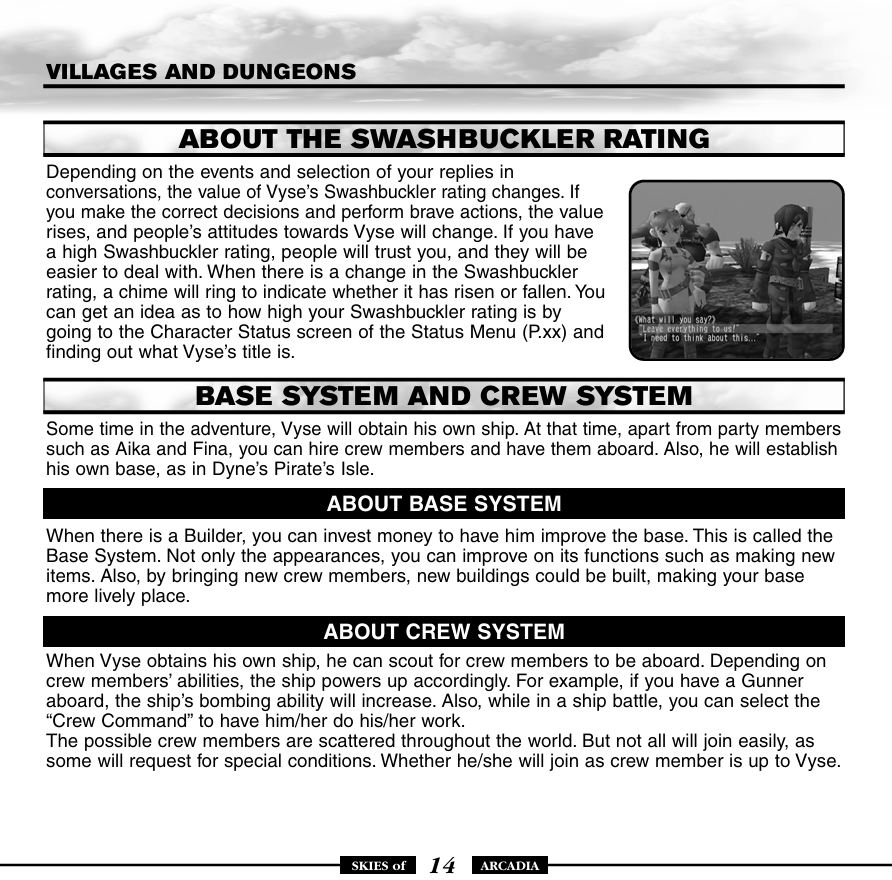
I certainly didn't read this as a kid when I played the game, but it didn't stop me from understanding the mechanics of how to play, be successful, and have fun while doing it. Does this mean the game had good game design that I could use context clues alongside trial and error to play?
This led me to two different ideas.
What types of tutorials exist?
In games, there are predominantly two types of tutorials that exist. Let's define what a tutorial should do. The standard requirements mean it must do the following:
- Be clear and concise
- Naturally integrated into the game
- Allow players to be active and engaged
- Be accessible to a wide range of players
Let's discuss the two types of tutorials we often see in games.
-
Never Ending Pop-Ups: The first and most classic is the never ending series of text boxes that pop-up from hidden triggers or when the player does something. It's distracting and jarring when playing a game and while exploring the space, an overlay with text is shoved in my face and read out loud. I don't want to play the game, or I want to skip the tutorial as fast as possible while maybe skimming the text, if at all.
-
Chunked Through Play: Players perform an action based on a prompt so the tutorial is spaced out a bit more but still a linear slog. These eat up a significant amount of play time and can lead to players quitting the game before making it through the tutorial entirely.
What are Game Manuals?
When games were primarily physical media, they shipped with a booklet that sat inside box that provided not only instructions on how to play but also lore about the game world and art. I know console gamers are saying things like, "I still buy physical games" and it's like yes...technically but instead of a game manual inside the case, what is it? ADVERTISING. Not only did game manuals provide context for the world, they gave hints on puzzles, lore on items, and other actionable intel that drew a player into the game before ever booting it up.
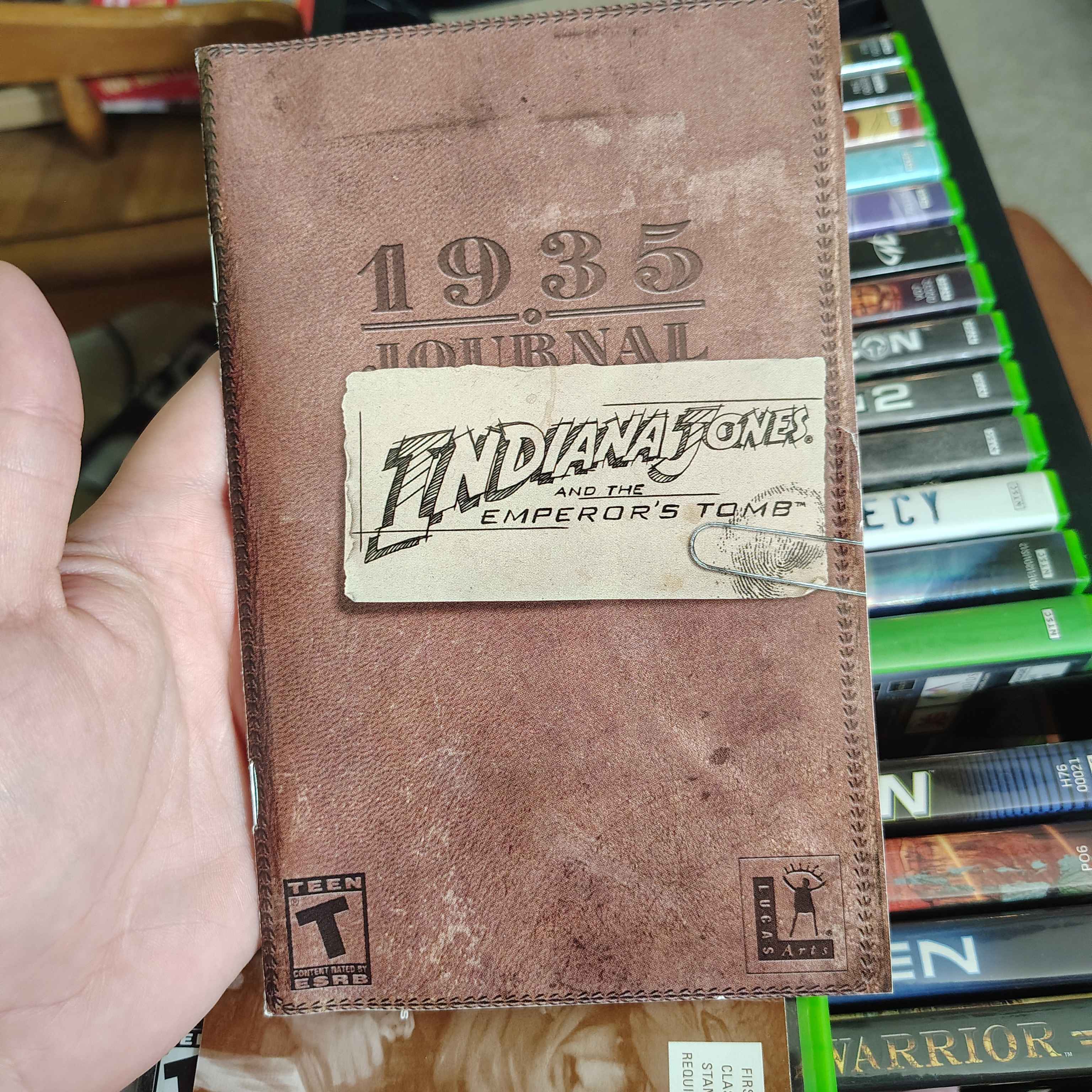
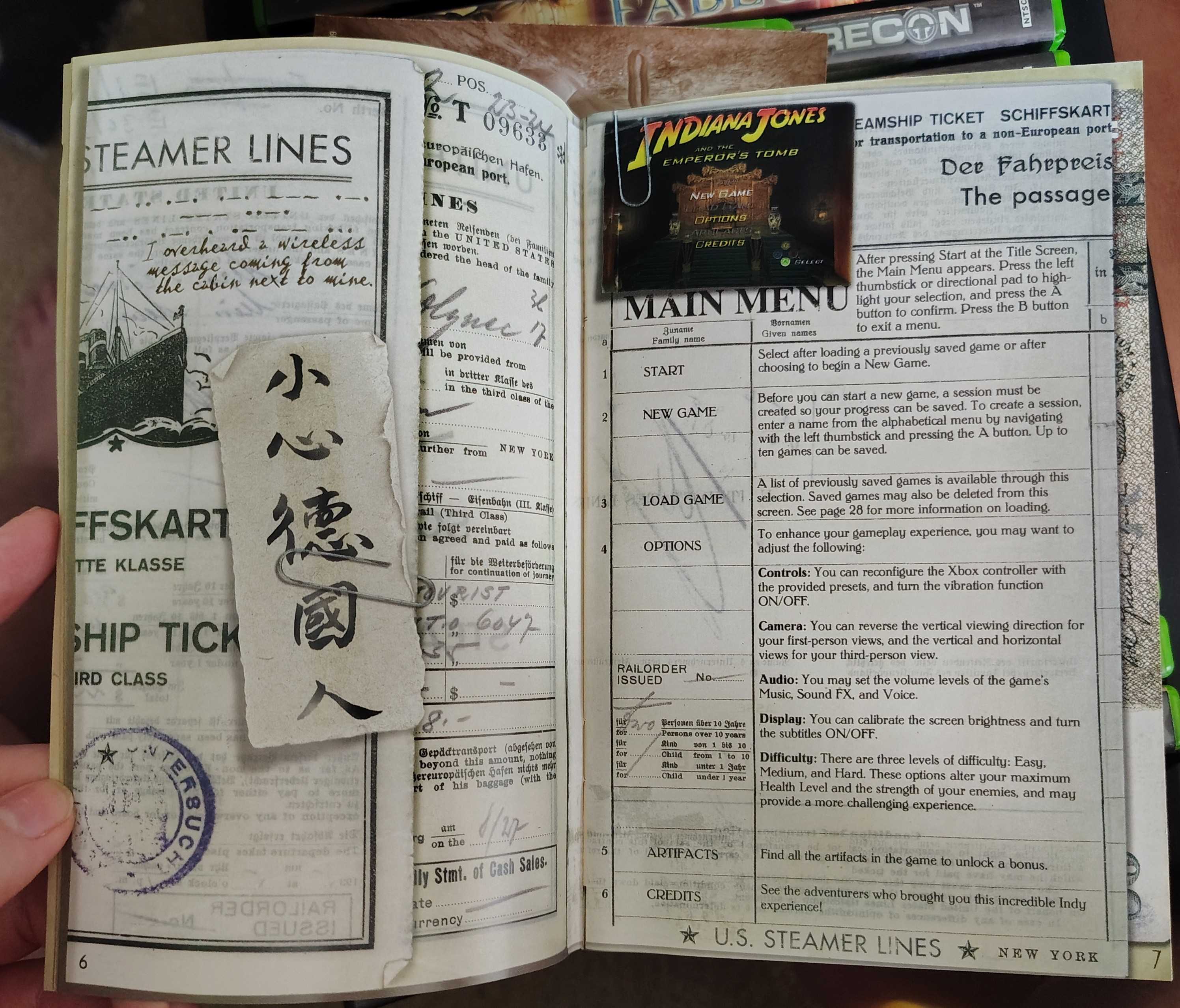
In the Indiana Jones and the Emperor's Tomb, every page of the game manual is dripping with lore. The cover its self is presented as a journal from 1935. The tone of the game and world are conveyed immediately (almost like an rpg book) to the player.
If you were really lucky, you'd get a fold out poster of the game's world like in Secret of Mana or Oblivion. Shoutout to Bethesda as they have an active web page with downloads of manuals for their games that had manuals, anyway.
Ana Luísa Osorio says it well on CBR in her article A History of Old Video Game Manuals & Guides, "Each manual was a reflection of the game's design philosophy." These physical books tied games to their creators in a way that liner notes in music did.
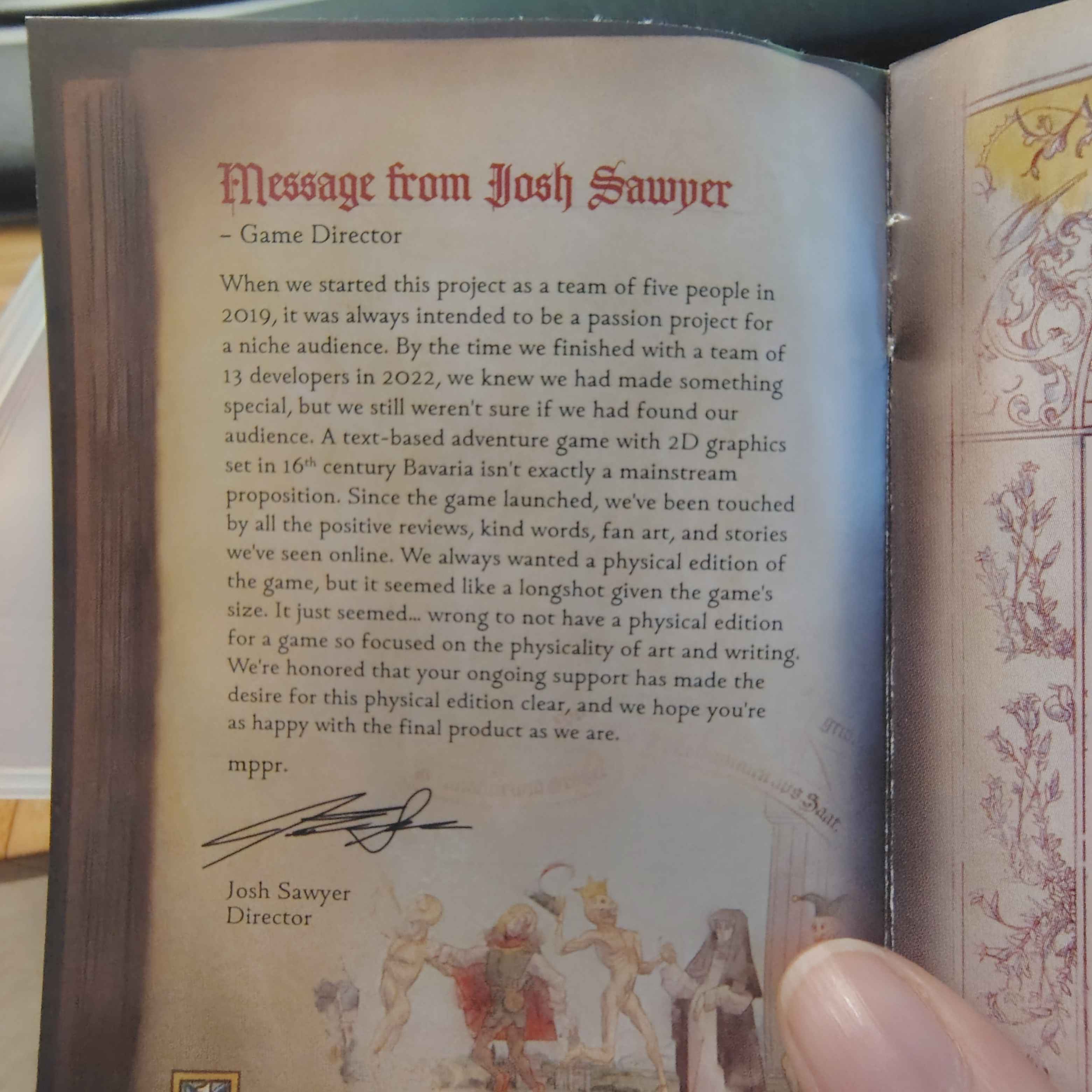
While the standard and quality of the game manual varied by game company, one was always provided. As things turned digital, the game manual left with the game case. Today, a game is lucky or highly successful if it receives a print run through groups like Limited Run Games. For example, the Nintendo Switch version of Pentiment shipped with a small 6-page booklet, providing a letter from the creator Josh Sawyer (who never expected a physical run), a controls page, and then brief bios on main characters.
On top of that, the dust jacket cover of the game is reversible, showcasing the mural in the game that sets the stage for the narrative.
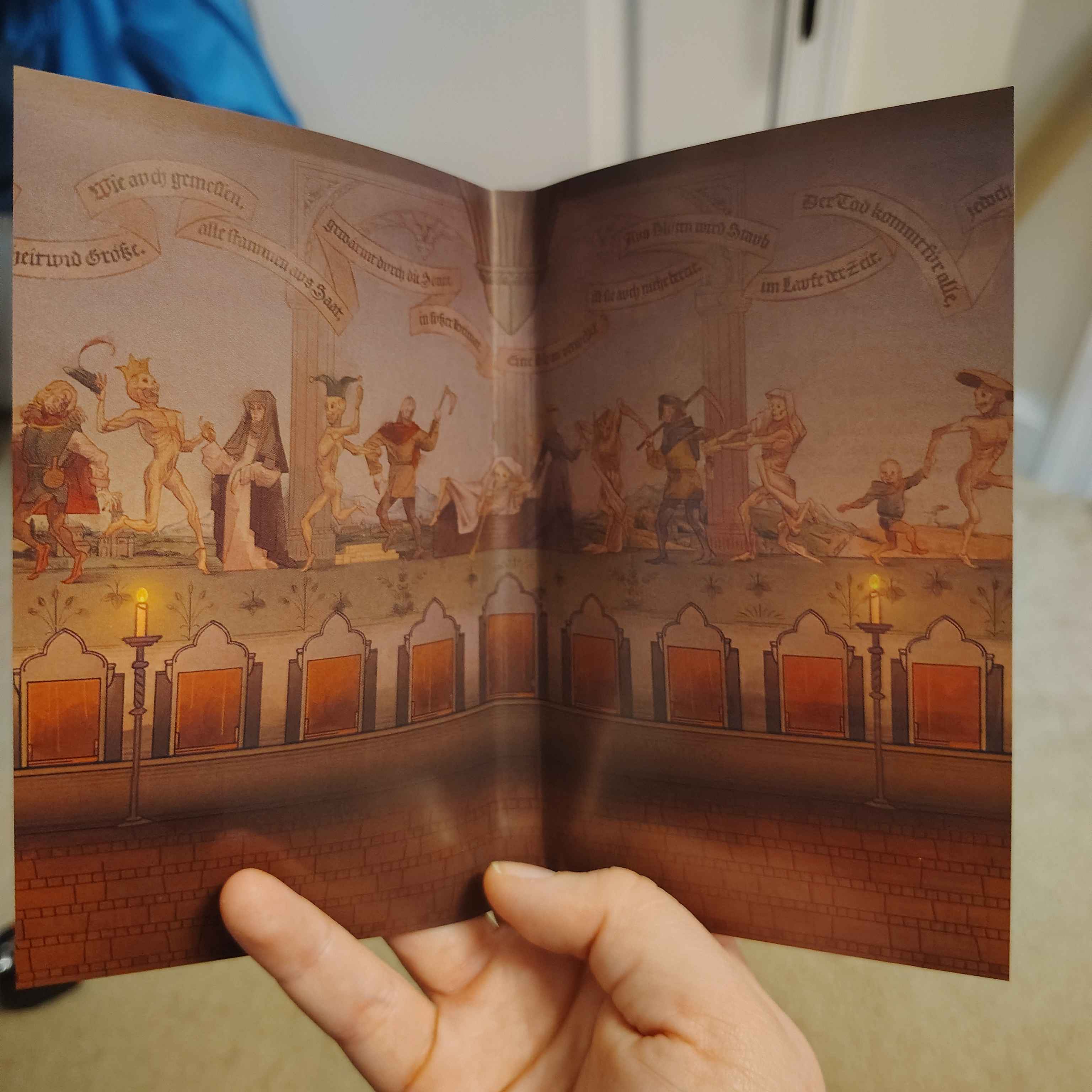
Claiming sustainability was the reason for ditching game manuals is a weak excuse. Designing a PDF that ships alongside the game is easy to include and would offset a lot of issues and provide neat insights into how the game was made. It's done for art books in games where art is a big component, but those are different from a game manual. An art book provides inspiration, process, iterations, etc. Those are cool, and I have many of them on my shelf. However, they serve a different purpose in my mind than a game manual. It could be argued that places like Lost in Cult who create Design Works are filling the gap on what game manuals used to provide. Again, this physical opportunity is limited to how successful a game is rather than being built in by default to the development of the game.
Game Manual Preservation
Many folks are doing the good work of preserving this piece of gaming culture at the following places:
Back to tutorials...
While there are examples of strong tutorials well integrated into the game, I wonder...do we need them at all?
Why have in game tutorials?
They eat up a lot of dev time and require rigorous playtesting for ensuring onboarding of mechanics is clear and accurate. There's a lot of work required to make a tutorial good as we've discussed.
Instead, we could provide a digital pdf for players to engage with at their leisure when ideas are unclear. How many times have you wished to skip a tutorial or felt it removed the immersion for you? Or worse, was unfamiliar with a genre of game and the tutorial was designed for a different level of player? Game designers inherently make assumptions about what a player will and won't know. With a game manual, a significant chunk of that's removed. Some might argue no one reads them anyway, and it would be a waste. I disagree on the grounds that we read manuals to play board games and rpgs. We should bring that back into games. It's still important to have the information somewhere. There's no faster way to lose engagement or for information to be missed than when a player is doing something, gets interrupted, and quickly moves past whatever information is trying to be imparted.
A bigger reason to ditch tutorials altogether may be to limit a somewhat learned helplessness in games. Research by Elizabeth Bonawitz in the Double-Edged Sword of Pedagogy: Instruction limits spontaneous exploration and discovery highlights two schools of thought on learning, the constructivist approach and direct instruction. Using a sample of 84 preschoolers, she showed them each the same toy with varying degree of instruction. One group had no instruction, one "accidentally" showed 1 specific function, and the last were given no instruction at all. The results highlighted that preschoolers who were shown 1 specific function discovered less of the other functions of the toy. There were 3 other things the toy could do. I'd love to see this same test repeated in video games where the same game showed different levels of play and then asks them to play the game. This would be hard given the fact that many people who have played games enter the space with different levels of assumptions, experience, and exposure.
Most all of this could be avoided with a game manual, though. If something is confusing to the player, they can reference the manual as needed. Of course, all that information will be plastered online as soon as the game drops, right? So who needs a silly little book? Sure, but the time and effort required to find it and/or time to watch until you find what you need is exhausting/could be incorrect. It's completely ruined what you were doing. Instead, you could pause, crack open your little game manual, find the entry you need from the creators who made it, and go, "Cool, I now understand that. Back to my game!" The cognitive load is light, the process is faster, and it's from the team who made the game.
Game manuals and other mediums
It's funny to me how the medium determines how willing we are to engage with written material. In board games, we must engage with a rulebook, or have a friend teach us, to understand how to play the game. In RPGs, the same is true. Yet, we've allowed video games to get away with not providing the same due to its digital nature. This is a disservice to players and devs a like. Video game manuals sit in an interesting space, because they have overlap between being part manual and part rpg book. Needless to say, we should bring them back.