Fleurons, Mother of all Bullets
Discussions around the bullet typographical device have been making its rounds in the Blogosphere and inciting much debate and discourse, which I’m partially adding to with this post. I’m not here to tell you whether bullet points are right or wrong, but I will tell you the history of them to the best of my knowledge. I’m interested in the following:
- The history of bullet points
- The integration of technology in technical writing and advertising documents
- Exploring the context of how ttrpg materials got here (a little bit)
A Printer’s Ornament
After reading Sam Sorensen’s post, Apologia for Plain Paragraphs, I wondered how long the bullet existed in our typography world.
A quick online search yielded me the etymology of bullet which comes from Latin “bulla” meaning ball. This makes sense given that for hundreds of years bullets were shaped like metal balls. While this provides context for why they are named, it does not give us insight into their formalized existence.
In more internet sleuthing, I found the first mention of bullet was in 1950 from the New York News Type Book though I could not find the book. It was referenced in a paper called The Humble History of the Bullet.
Presumably this was to fill white space left in advertisements. The bullet point was never a synthesizer or item lister. Its origins go back centuries earlier to the Fleuron, a printer’s ornament, perhaps the mother of the bullet. The fleuron, pictured below, was often flower shaped images placed in manuscripts to (1) provide a decorative border (2) fill the white space left from an indented piece of text or (3) to serve as paragraph breaks.
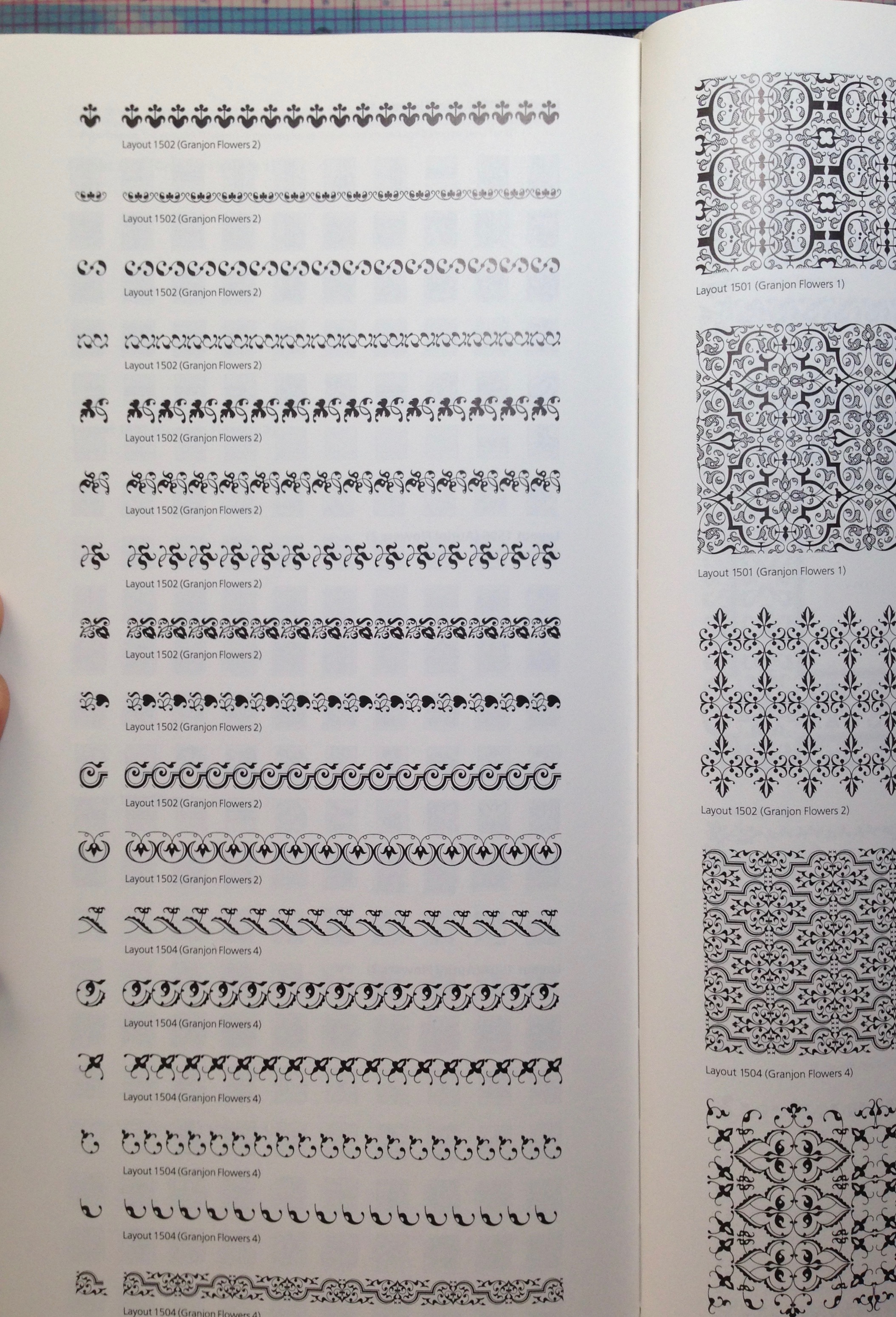
The most famous fleuron is an ivy leaf, also called a hedera. The hedera was used in early Greek inscriptions. Hedera is Latin for “ivy”.

As printers evolved and competition arose, different types of printer’s ornament gave way. There’s a fascinating relationship between architecture and ornaments that should someone know more, please share with me. Still, the first usage cited of the fleuron gracing the world with its presence was in 1515 on the title page of Jordanes de Rebus Gothorum, printed by Miller of Augsburg.
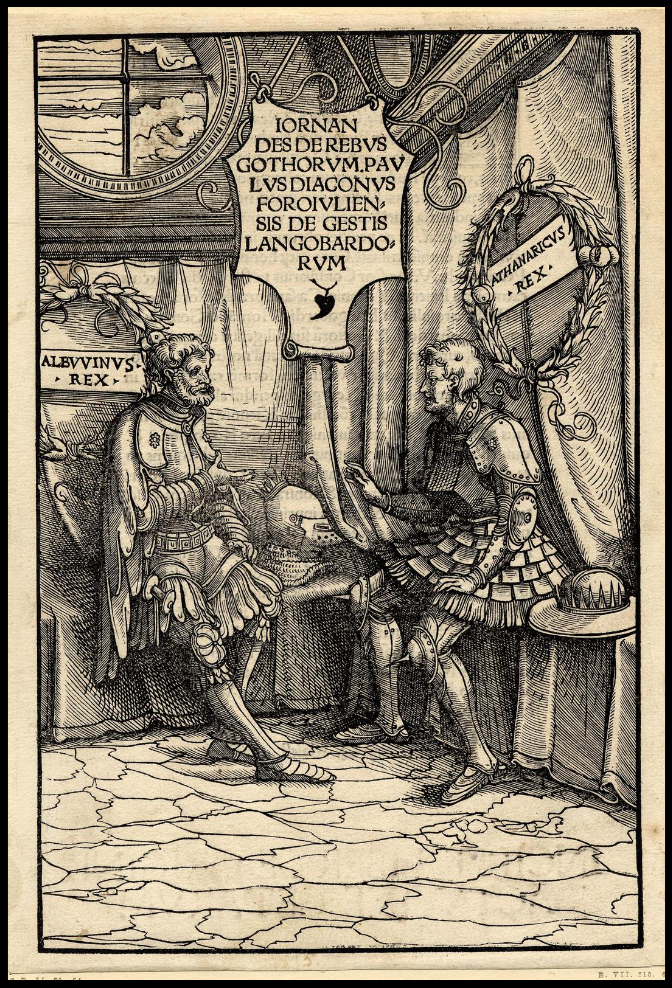
Sure, you’re probably thinking the asterisk bears a closer resemblance to a bullet than this little flower ever did. Well, you’d be wrong up until a point. Historically, asterisks were used as footnotes only. They originated from Sumerian texts, specifically when Aristarchus of Samothrace was editing Homer. It wasn’t until the 1850s we started to see the Dinkus typographic device, three asterisks, or bullets, in a line, breaking up sections of text, serving a similar purpose to our loving fleuron.* Their prevalence over the fleuron is perhaps due to the time consuming and complexity involved in creating fleurons and so the heart-shaped leaf fell to the wayside.
*Fun fact: If you type 3 spaced out asterisks in mark down, it will create a horizontal line.
A Brief Intermission
Symbols next to an indented line of text have been around for centuries. In the Elements of Typographic Style, a bullet is defined as:
Bullet A large version of the midpoint, used chiefly as a typographic flag. Bullets are commonly hung, like numbers, in the left margin to mark items in a list or centered on the measure to separate blocks of text. See also midpoint.
When we go to midpoint in the book, we get the following definition:
Midpoint An ancient European mark of punctuation widely used to flag items in a vertical list and to separate items in a horizontal line.
The term bullet comes from the French word boulette, meaning “small ball” and was in reference to weapons, not typography. The image for a bullet, a larger dot, is similar in looks to the Interpunct, a black dot used to break up words in Latin texts. They showcased the first example of word boundaries. Interpuncts also took the form of triangles, squares, or squares rotated to 45 degrees (essentially diamonds).
This tells us two things. The first is that the symbol for bullets has existed for a long time, and at some point, the use case of it shifted into something new as both language and technology changed.
From Style to Synthesis
Remember, the first mention of the bullet as a printer ornament was in 1950, which we still sometimes see in materials but far, far less than its more ubiquitous form of the synthesizer.
The Oxford English Dictionary (OED) defined bullet multiple times over the years with its first mention of bullet (other than as a weapon) in 1960, defining a bullet as, “small ornaments…primarily useful as type-breakers, story-starters, and story-enders, in which instances they are usually referred to as dingbats, bullets, or spots.”*
Bullets by the OED definition referred to the symbol and its function. It did not include the accompanying text with the symbol. It wasn’t until slides about a newfangled product called Presenter hit the scene in 1984 that we began to call them bullet points and alter our communication styles. After a few short years as Presenter, it would be patented as PowerPoint and bought by Microsoft.
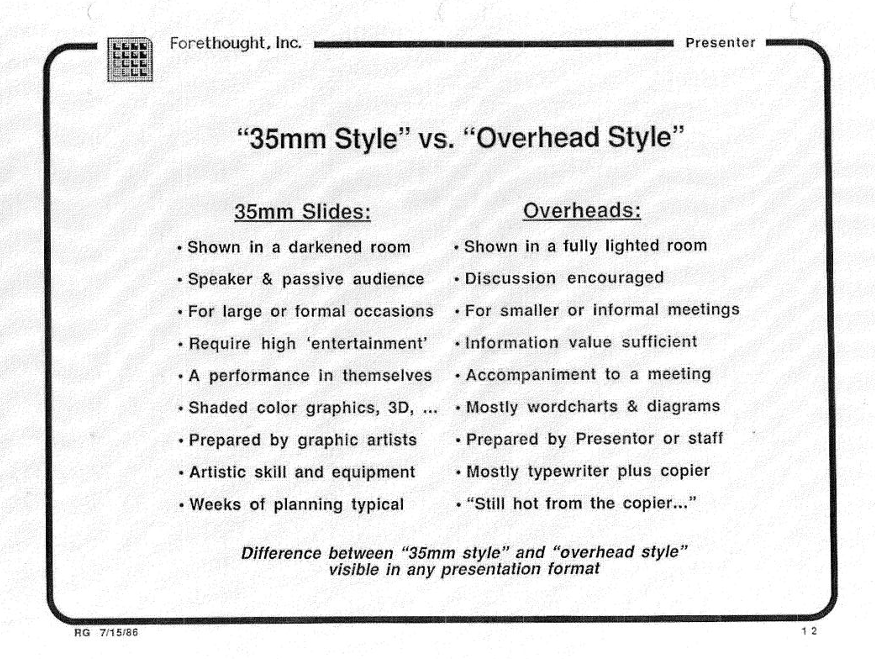
*Dingbats originally were a humorous jab at fluerons but rose to prominence in the digital age from ITC Zapf Dingbats, a non-alphabetic font for use in printers. The term is also used in lieu of printer’s ornament.
A Violent Digital Trend
By the time PowerPoint was accessible to the public, bullet points rather than bullets in typography took over the scene. Fast forward to the 2010s. A paper called The Humble History of the Bullet appeared in the American Society of Electrical Engineering in 2011, citing how bullet points evolved from bullet to bullet point to bullet list. It also discussed how these lists can be useful but are also flawed and dangerous, depending on the information they’re conveying. The paper looked at how NASA reports were being constructed with the usage of bullet lists. The most notable example references a report done by Richard Feynman where a Recommendations report – a bulleted list – suggested the secondary seal was critical and needed addressed while in a later bullet point determined it was safe.*
*The paper is called “An Outsider’s View of the Challenger Inquiry” and was published in Physics Today in 1988.
So What?
What does all this have to do with ttrpgs? I did a re-read of OD&D I, and there isn’t a single bullet point in the text. There are many numbered lists, tables, and paragraphs of prose, but there aren’t any bullet points, summarizing sections or providing short-form text of what’s already said in paragraph. This makes sense given the history of bullet points. OD&D was released in 1974, and we know the bullet point didn’t gain a lot of traction until 1987, due to PowerPoint.
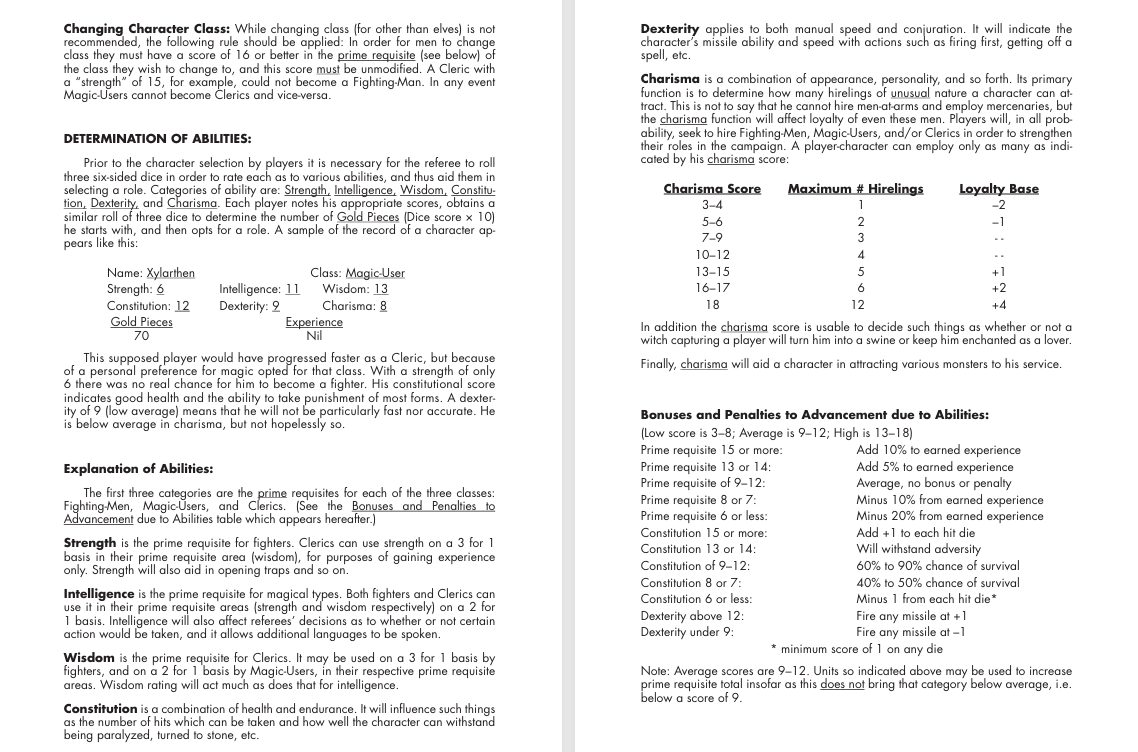
This is not to say the format of OD&D is “correct”, but it’s matching our typographic timeline we’ve curated for the bullet and bullet point.
If PowerPoint had the level of impact, we think it did, then in AD&D 2e we should see significant format changes and we do! We move from two columns per page to three and within those columns, we get callout boxes and bullet points, particularly in the section for methods to generating character ability scores.
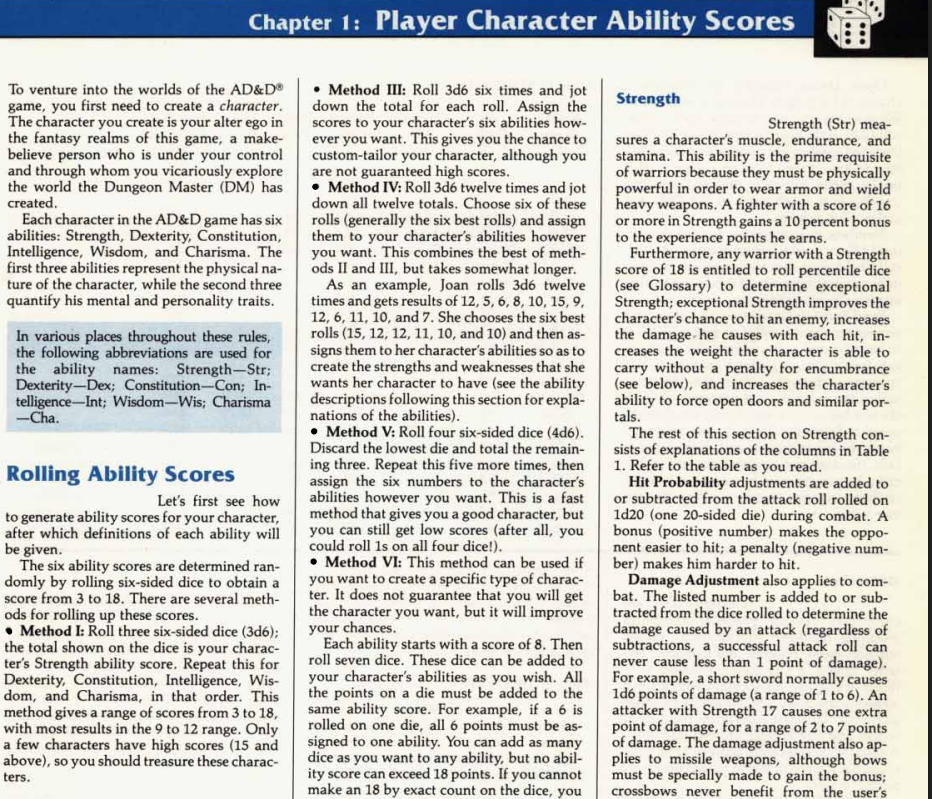
It’s interesting how the bullets are being used almost akin to fleurons, filling in white spaces for indentations. Though as soon as we get to the AD&D 2e (revised) that’s published in 1995, we see what we now know are traditional bullet points being used regularly.
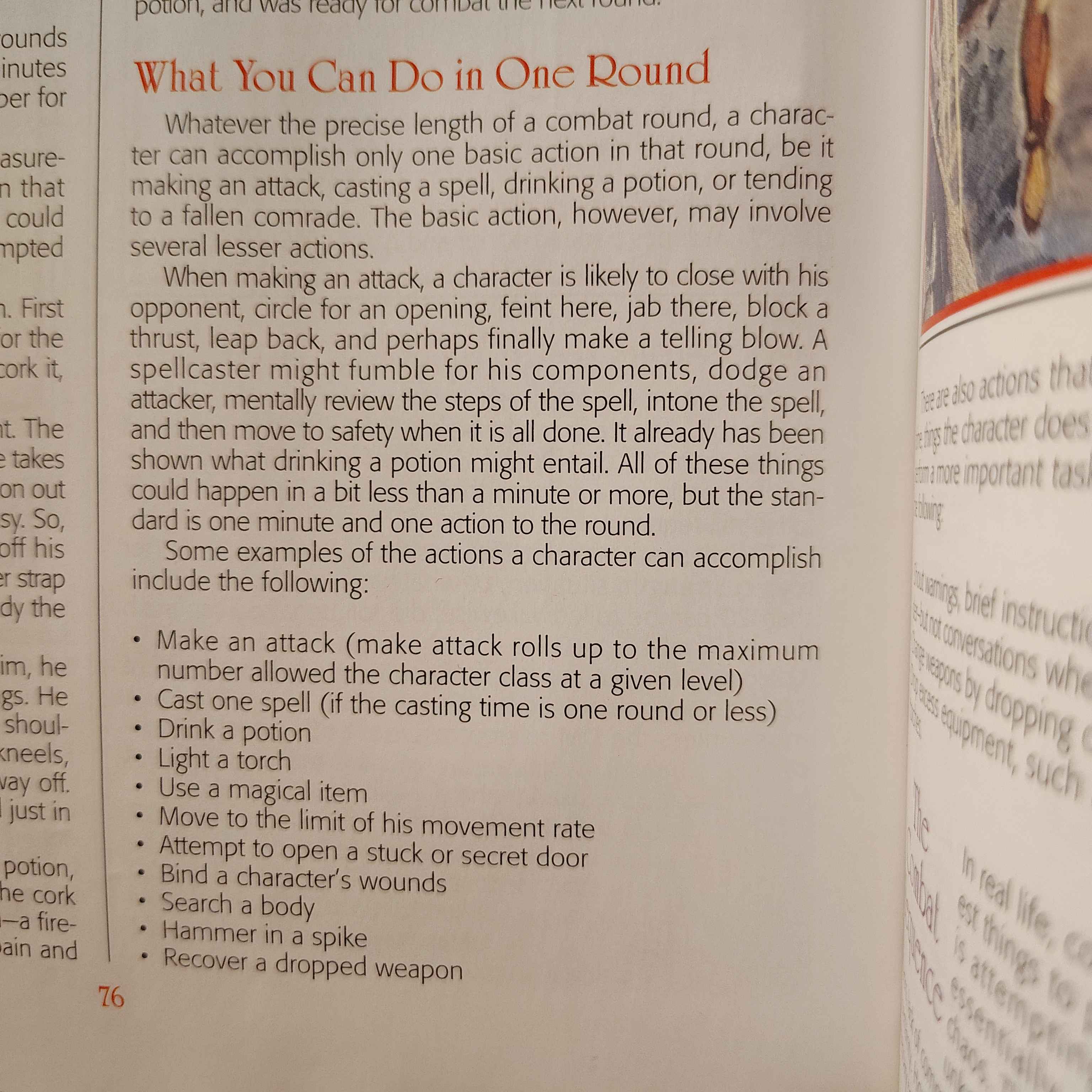
Of course, the trend has continued in all written forms of communication. While I am not writing off bullet points, I think I will endeavor to do the following in my ttrpg work:
- Use a numbered list! The hierarchy they provide is a guide. Not all information will be equally important.
- If I am going to use bullet points, use a fleuron instead, if applicable. They're more fun. :)
I find this research has been incredible in discovering the evolution of typography's bullet in relation to technology and ttrpg materials. It was not a conscious choice we made but one made by technology its marketing goons of convenience. Bullet lists were marketed to us as a one-stop shop for communication, but years of being taught through PowerPoint slides has hopefully taught us better. Now, we decide when and how to use them.
If you liked this or have thoughts, shoot them over on BlueSky.
References
- AD&D 2e Player's Handbook
- A Star is Born: The history of the asterisk
- BULLET POINTS LIKE DUST IN THE EYE OF GOD
- Contra: Apologia for Plain Paragraphs
- English printers' ornaments
- Fleuron
- Miscellany No 89: 2020, year of the asterisk
- OD&D Dungeons & Dragons Original Edition (0e)
- The Elements of Typographic Style
- The Fleuron: A Journal of Typography
- The Humble History of the "Bullet"
- Title-page to Jornandes and Diaconus, 'De rebus Gothorum ... De gestis Langobardorum', Augsburg: Johann Miller, 1515.